The Pleaser

When I asked a fellow student of the teachings about somebody who I saw as “odd” in their behavior or ability, he said, “Aw, they just showed up that way.”  It seems that I “showed up” with an obsession to being a “pleaser”

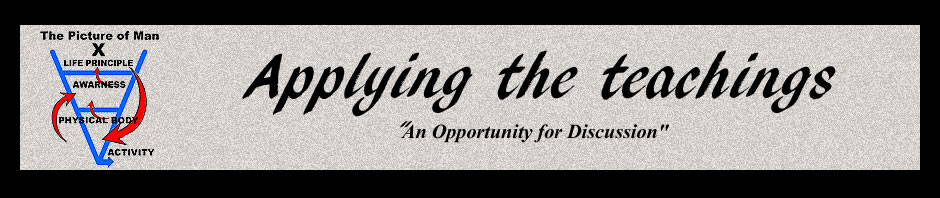
See #3 in the picture of man. 

With the introduction to the teachings, I observed the “pleaser” running much of the day’s activities.  It seemed the only way I knew to function with people.  I felt even though I was “asleep, it was better to be B sided than A sided.

As the observing “self” went along, I realized that unconsciously, I was being controlled by the four dual basic urges.

See Four Dual Basic Urges.

I could certainly see that one motivation to please was to escape disapproval; and that only led to jumping around in the picture of man.  I would flip to #5, wanting to “self-improve”, or “act differently”, and if that didn’t work I was tempted to A-side #2 and to “stick up for my rights”

Pleasing (whether I wanted to or not) also lead to a desire to be appreciated (which if wasn’t expressed back to me) led to disappointment and an urge to #5 “blame and judge”.

But the one that I was very glad to finally observe is that when I pleased some people, all it engendered was their asking for more, better or different.

Someone mentioned to me about “setting boundaries”, and I found that a very good idea to work with.  So, I began to look at what I wanted to “do” as opposed to what I thought I “had to do” for others.  If I felt overwhelmed, I began to remember to decline graciously.

There is another idea that knowing my weaknesses could be my greatest strength, and I learned that when I overextend myself, I drop into a state of “held resentment”.  I now see that “holding accounts” makes for a tenuous relationship which, to me, has no value for either of us in the relationship.

See states of consciousness.

Recently when I was asked to play a job, I accepted.  When the music arrived, I discovered that there was too much, and two of them were too difficult to accomplish within the time limit and my limited sight.  I got that dreaded emotional turmoil in my belly and decided that I must do something about it.

I wrote an email explaining that I understand that it is impossible for a sighted person to relate to the challenges of a partially-sighted person reading complicated pieces of music.  Thankfully, with the communication, it was changed to only one difficult piece and 6 hymns that were pretty easily executed.  I felt I “could do” that” and also have a small enough challenge that would make life interesting.

The challenge of the overall picture was to see “what I could or could not do”, “what she would do without” and “what was possible for the job”—in other words I was able to see “What was going on” and changing the “form” for a more positive “result” for all involved.

See the four forces.

This experience turned out far better than if I had succumbed to reaction by “blowing off steam” “quitting” or “holding resentment” which thereby  creates imbalance in the body that must be adapted to.

This experience and the observation thereof has helped to tie in many of the illustrations of the teachings and shown me how beautifully they can aid me in seeing “what’s Going On”.

Posted in Uncategorized | Leave a comment

Think Act Feel

In the teachings, it has been brought out that most of us arise in the morning and ask (internally) “how do I feel?”  If we come up with a certain picture of miserable, sad, tired, anxious, and many other lower states, then we proceed to act that way.  The result comes down to drawing a conclusion that the day as been ruined and will  continue that way for who knows how long—perhaps until somebody else comes along and changes it for us.  When we do this, we tend to actualize that attitude in everything we do that day.  So in viewing the larger picture we woke up “feeling” and then began to “act” and the “feeling” then became our unconscious motivation for the day.

If you take the first letter of each word of “feel”, “act” and “think”, it spells “fat”.

It was suggested that when we find ourselves in a less advantageous state, we can reverse that acronym to “TAF”.  That means:  1. think how I would like to feel, 2. begin to act that way (for at least 30 minutes) and then see what happens.

Check this link “Think – Act – Feel – An Idea to Work On”.

In using this exercise I discovered it works.

After practicing piano intensely for hours and days, I realized on the day of the concert that I was overwhelmed.  I had practiced so much that the tunes were running together, and I couldn’t remember all the designated intros and endings.  I decided that I didn’t want to take those trepidations with me to the job, so I proceeded to use the “TAF” exercise.  When previously trying the exercise, I’ve always had trouble coming up with enough feeling words and consequently dropped the experiment.

So I began with:

“Think”- how would I like to feel?

Accomplished came to mind and a picture began to form.

–I could see that even though it was new and different, I still have had a lot of experience.

Adventurous then came to mind – since it was jazz, I wanted to risk improvising on the melodies even if they weren’t to my ideal.

Confidence – Well, I wasn’t feeling confident, but how had I acted when I had felt confident in the past.  A picture of a walk and attitude came to mind and I sure could fake that for a bit.

Next came “Free”  Ah, I thought, I could be free to experience being ignored, rejected, disapproved of and feelings of inferiority for just one night.

I decided that I would also be free to not use disclaimers as to why I might not do well—after all, if I did that, I was only setting myself up for failure.  People don’t’ want to hear all that “drivel” anyway.

Next came “light hearted”   I have watched people be light hearted when things seemed important and serious; and they always made those situations easier to handle and sometimes they even turned into funny—I wanted to see the  see the fun and humor in the game.

I then remembered that I was “privileged” to get to play with a wonderful horn player and an exciting drummer.

I also saw the I was listening to the “ideal makers” I was trying to fit an imaginary picture in the mind of playing everything perfect without a miss—impossible—why not just let it be—let happen what would happen.  Every gig I ever played had always turned out fine up to this one, why should it be any different?  Listening to the “ideal makers” or those that make every little detail “important” can be like a disease—I get “ill at ease” if I buy into the suggestion of “importance” and the anxiety it creates in me has no value as I never play well when I’m anxious.

By the time I was through the trepidations disappeared.  I walked through the house as I was getting ready with a walk of confidence and acted like the picture I had been thinking of.  What was the result?  It was a delightful and memorable experience with freedom to play, an enthusiastic audience, an impressed employer and a potential for future gigs.  I expressed joy and an appreciation for all Life.

Yes, I now remember that it isn’t the “thinking” of the teachings that transforms—it also needs the “action” which creates the form and the result has a lot better chance of being to my advantage.

Posted in Uncategorized | Leave a comment

Pleasant Mood Contribution

In studying the “self”, the teaching says that we unconsciously seek non-disturbance or gratification of all the senses; and thereby are mechanical—not awake—not aware.  One purpose was given to us as an experiment—that is to be what, to me, is being a good guest or making a little contribution to a pleasant mood.  This seemed pretty easy and a worthwhile activity; but I discovered can sure get twisted.  I have worked with this idea for years.  To begin with, I didn’t recognize the “little” and tried to “make” the pleasant mood for everyone whom I eventually found was quite egotistical and not possible.  I also began to see that I twisted it into “pleasing people”, “doing whatever they asked” or “helping people”.  I thought that’s what “making a little contribution” meant—it doesn’t.  I just ran across an excerpt in the vintage tapes that puts a little more light on the experiment.

Someone in the audience says:

(I established my purpose to be a good guest and contribute to a pleasant mood, but does that always mean to somebody else’s pleasant mood instead of mine?)

Now there’s no such thing as another person’s pleasant mood and my pleasant mood–there’s only a pleasant mood. I think we have repeatedly said–If you were in a car going down the road all by yourself, you’d want a pleasant mood in the car. So the pleasant mood is being made for you. If you’re somewhere else and you’re contributing to a pleasant mood, it is for you and it is for everybody around you. I can hardly conceive that you would be in a foul mood and be contributing to somebody else’s pleasant mood–it flat doesn’t make sense. There’s no way you could do that.

So when I contribute to a pleasant mood, the mood covers everybody around including me. In other words, if I’m in a room with eight people, and I have a pleasant mood, it covers nine people. If I’m in a room with only one person in it, that’s #1, then that pleasant mood only covers one. Mood is something we live in like a fish lives in water–it is not something I’m doing for another person or doing for myself. It is a state I’m setting up all around me. You might say the only light you will ever live in is that which you generate for yourself. So if I generate a pleasant harmonious mood, I’m in that mood as well as everybody else around because the mood is the environment; and we’re all in the environment– so it is not  just for me or for another person.

Posted in Uncategorized | Leave a comment

Multi-Tasking

[From Marsha…..long ago when the children were infants and toddlers, it took a lot to keep up with their needs and safety and also take care of cooking, cleaning, laundry and grocery shopping.  I just took care of what I could and learned to leave some things undone—sometimes for a long time.

Then a few years ago when I was job hunting, I saw the phrase ‘must be able to multitask’.  That sounded like a good thing at the time and something to develop to be more employable; although I later suspected that the employer wanted to be able to get more work from an employee to reduce the number of people who needed to be paid.

And I have begun to re-evaluate this multi-tasking idea with the teaching ideas of being in the present moment.  And so here is an excerpt that explains that a lot better than I can.]

Question from the audience:

(What’s the purpose if you’re only going to understand this moment—there’s no place to go and what would be the purpose?)

Because you’re thinking that without a future there is no purpose, right?

(What’s the purpose of getting into an automobile if you’re going somewhere if your only purpose is to see the present moment….and he goes on and on…………..)

My teacher says:

Suppose you got in the automobile; and you were only interested in getting to Provo.  So you had your attention strictly on what you were going to do when you got there?    Are you paying attention to your driving and the cars around you if you are thinking about what you are going to do there; or are you paying only a very small attention to the driving and a lot of attention to what you’re going to do in Provo.

(Either way.)

You’re attention is divided up—I’d rather not drive with you if you don’t mind because your attention is all split up; and you’re not paying very good attention to the highway.  What’s happening on the highway requires 100% of attention—changes can occur very quickly and the road become instantaneously dangerous.

(I doubt that would ever happen though.)

Is it possible that we want to look at things into the future, and we’re not willing to look at n0w?

When is it that you do something?

(Now.)

It’s always now.  If we do something now–this now is a fluid thing.  It’s not a disconnected spot.  And it’s possible, that if you live in present time that you would be far more efficient in each new direction rather than trying to live in many different places at the same time.  You mentioned a while ago about a limited attention span, and it, truly, is rather limited.  So, if you have your attention on Provo, on the highway, on something that went on yesterday and something that might happen next week, your attention is scattered until there is very little of it anywhere.

Now if it is all in the present moment without any struggle, this moment may be much fuller.  Every moment leads to another moment, right?  And if a person lived in present time, which is always now, they would find that their efficiency and memory steps up many hundreds of percentage points at once.

Of course most people’s minds is scattered in many places; and that’s why that statement you made that the attention span is limited is correct.

So consequently the attention is always bouncing from one of these things to another, isn’t it?  But it can be all one and in the present time.  The present moment is ever changing, so the attention would be very expanded over what it generally is—could that be possible?

So is it possible that living in the present moment might take care of all the other moments quite well?  When one is not living in the present moment at all, precious little attention is on the present moment–it’s on what will happen, what did happen, what he said, what she did, what I must or should do until there is very little attention paid to this moment.  So the sequence is in chaos.

This is a little story I told some time or other, and it’s a true one.  I went into a lady’s house one time and the kitchen was in a literal chaos–including her—she was perspiring and quite rattled.  The oven had black smoke billowing out of it—there was obviously something burning.  She had just dropped a head of lettuce on the floor and was chasing it, and the place was quite cluttered.  I asked my favorite question.

“What are you doing?”

She implied that I was a blankity-blank idiot for asking, but she said, “I’m trying to get dinner on the table.”  Her attention was getting dinner on the table—the end result.

A few days later I was in another home and the contrast was quite visible to me.  The lady was all dressed up and she had on a pretty little apron.  She was making salad—the oven was lighted and everything looked under control.  The little pots were sitting on burners bubbling away.  And so I asked my little question again.

“What are you doing?”

She said, “I’m cooking dinner.”

Now she was in present time, the other woman was out of time.  The other lady was trying to get to the conclusion without taking the logical step by step process as it comes along in daily living.

Now I’m sure that dinner got on the table in a much more enjoyable fashion in the second home and also much more efficiently because it was the logical outcome of what she was doing—she was living in the moment.  Each moment led to dinner on the table–and it looked like it would be a much more peaceful and joyful dinner in that house.

FYI, I have also put this Blog Entry on the EXCERPTS page.

Posted in Uncategorized | Leave a comment

Non-disturbance vs Peace

It has come up in conversation that the two words sound like the same thing, and it sure seems that way.  What can help is finding the definitions for the words.

The teaching speaks of wanting non-disturbance.  We do and say things to GET non-disturbance.

So we have from “Illustrations” on the web site the 4 dual basic urges which are stated, basically, as:

On a Physical level to gain comfort and pleasure and escape pain or discomfort.

On a Mental level to gain attention and escape being ignored and rejected.

On an Emotional level to gain approval and escape disapproval.

And sometimes called Spiritual, sometimes Transcendental and sometimes “urge to power”,  to gain being needed or a feeling importance and escaping a feeling of inferiority or insignificance.

In “The Place of Language” peace is defined as an absence of competition.  I’ve also heard it defined as “not wanting to change anything”.  So if I’m peaceful it seems it is a “state of being” rather than trying to GET something.

I AM peaceful, but sometimes I go to sleep to seek non-disturbance.

Posted in Uncategorized | Leave a comment

Contemplating Thankfulness

Sometime when you want to drive yourself up the wall, sit down and try to figure this out.  Who all did the thing. What was the product made out of—we’ll say steel.  So somebody had to mine iron.  Somebody had to mine coal or coke.  Somebody had to mine other things, and they had to put a big furnace together.  The people that ran the furnace had to eat as well as all those other people doing the other things.  Somebody had to produce food.  Somebody had to produce shelter; and so we look … it seems that everybody is involved in the simplest things we have from a loaf of bread to the watch on your wrist to a piece of furniture or anything else that we may have or use.

I sat down and thought about a Vladimir Horowitz cassette tape I had.  I thought about his mother and father, his lessons, his teacher, his piano, the recording studio and all those people who did the recording.  Then it came to the items to make the tape and the travel to the store.  The store that sold it and the clerks.  The tape player I bought so I could hear it.  And I paid next to nothing to have the enjoyment of his playing.  What an exercise!

Posted in Uncategorized | Leave a comment